Minnesota Lawyer and Finance & Commerce
Betting is no longer limited to sports. Thanks to the meteoric rise of prediction markets such as Polymarket and Kalshi, individuals can now bet on virtually any real-world event, ranging from economics and politics to the weather and the Academy Awards.
Predictably (pun intended), prediction markets are rife with both opportunities and risks. On the one hand, prediction markets can be used to track and collect meaningful economic data, which may then be utilized as a forecasting tool for risk-management and polling purposes. On the other hand, prediction markets—which currently remain largely unregulated—may allow for insider trading and market manipulation. Critics claim that prediction markets constitute a form of gambling that seeks to take advantage of an already vulnerable group of people who struggle with gambling addiction. The unbridled nature of prediction markets can also raise significant ethical concerns; in March 2026, for example, Kalshi found itself in hot waters after refusing to pay out $54 million to individuals who had bet on the late Iranian Supreme Leader Ayatollah Ali Khamenei’s ouster from office before March 1 due to a belated “death carveout” provision following Khamenei’s death.
Some lawmakers have taken action to limit the reach of prediction markets. In May 2026, Minnesota lawmakers, concerned about the negative effects of prediction markets on constituents, passed the nation’s first law (original proposed in S.F. 4511 and as amended and adopted by S.F. 3432) banning prediction markets in the state.
The law, which is codified at Minnesota Statute 609.7615 and was set to go into effect on August 1, 2026, imposes criminal penalties for those operating prediction markets and engaging in activities in support of such markets. The law defines a “prediction market” as a “system that allows consumers to place a wager on the future outcome of a specified event that is not determined or affected by the performance of the parties to the contract[.]” See Minn. Stat. § 609.7615, subd. 1(e). The law further imposes felony liability on any person who “creates,” a prediction market; “operates, manages, or controls” a prediction market platform; “intentionally facilitates the operation of a prediction market,” “provides data, information, or verification services . . . directly to a prediction market,” or “provides supportive services” to a prediction market.” Id. subd. 2. The law also imposes felony liability on anyone who “advertises or markets financial or technological products that promote transactions” prohibited by Section 609.7615. Id. subd. 3.
The end result of the law would be forcing prediction markets such as Kalshi and Polymarket to leave Minnesota. In addition to Minnesota, fourteen other states have introduced bills seeking to curb prediction markets.
In response to the Minnesota law, Kalshi, Polymarket US, the United States, and the Commodity Futures Trading Commission sued the State of Minnesota and moved for preliminary injunctive relief. Plaintiffs allege that the statute is expressly and/or impliedly preempted by the Commodity Exchange Act. In addition, Kalshi and Polymarket US claim that the statute violates their First Amendment free-speech rights.
On July 27, 2026, Judge Katherine Menedez granted Plaintiffs’ motion for preliminary injunctive relief. See United States v. Minnesota, __ F.Supp.3d __, 2026 WL 2150211 (D. Minn. July 27, 2026). Judge Menendez found while “the Minnesota statute may not be preempted in all its application,” the law is “likely preempted in many respects,” based on Plaintiffs’ showing that the Commodity Exchange Act grants exclusive jurisdiction over transactions involving swaps. Id. at *9-15. Because Plaintiffs showed a likelihood of success on the merits of their express preemption claims, the Court declined to reach whether Plaintiffs are likely to prevail on their implied preemption or First Amendment claims. Id. at *16. Judge Menendez further found that Kalshi and Polymarket US demonstrated “at least some threat of irreparable harm,” including “substantial liability to Minnesota traders” and an inability to “recover damages from the State of Minnesota because of Defendants’ sovereign immunity.” Id. at *16.
As a result of Judge Menendez’s ruling, enforcement of Section 609.7615 is temporarily on pause. Businesses operating prediction markets in Minnesota may continue to do so in the meantime, but they should also be prepared to take any steps to ensure compliance with the statute based on the Court’s subsequent rulings.
While the future of Minnesota’s ban on prediction markets—and, by extension, other states’ attempts at regulating or banning prediction markets—remains uncertain, prediction markets are likely to continue flourishing. Some may say we should even bet on it.
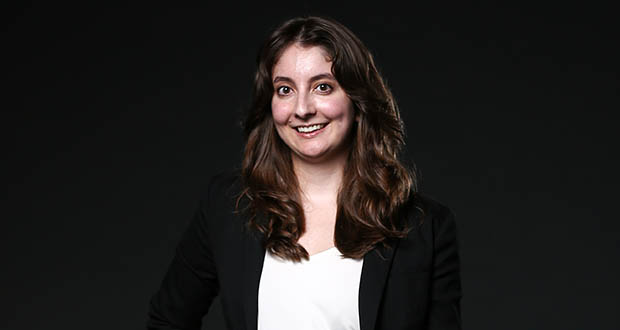
Kathryn Campbell is an associate at Anthony Ostlund Louwagie Dressen & Boylan P.A. Kathryn represents clients of all types in litigation involving shareholder disputes, breach of contract, trusts and estate disputes, employment, fraud, breach of fiduciary duties, and other business disputes.